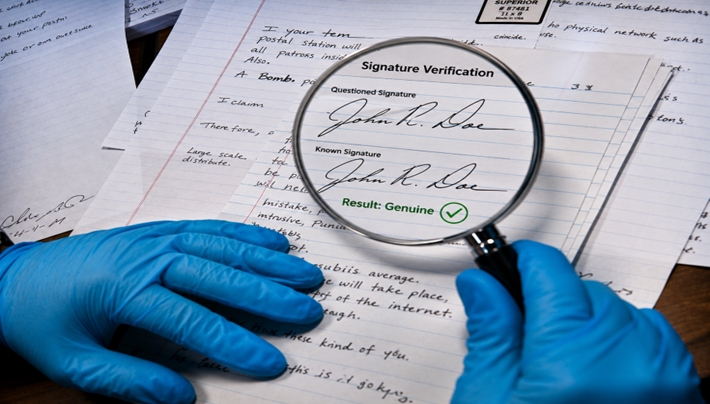
Handwriting Examination
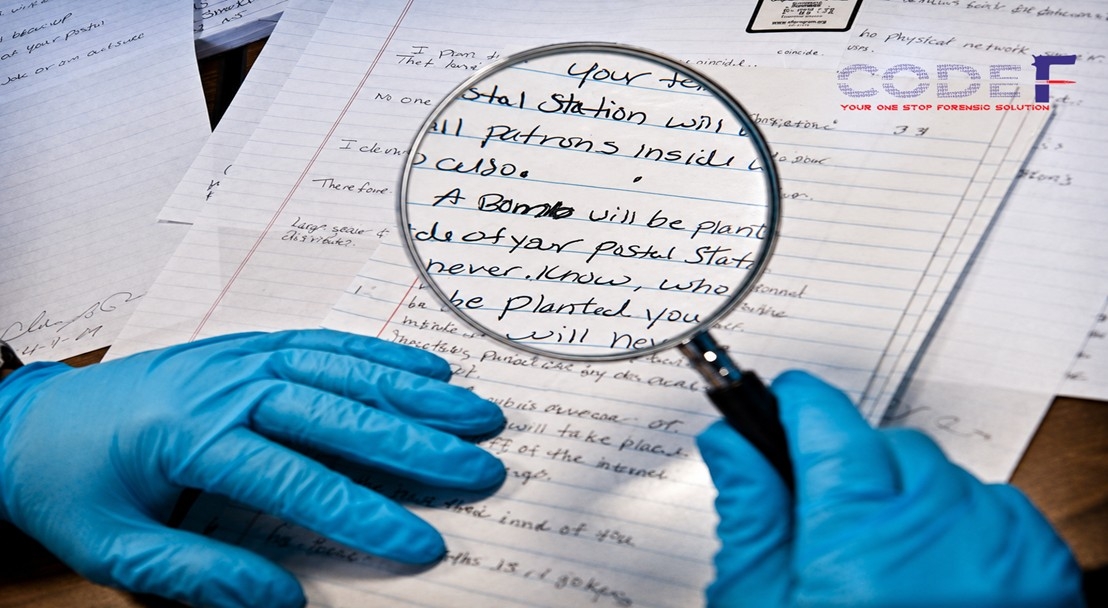
Handwriting
examination is a key component of forensic document analysis that uses
scientific methods to compare writing traits and establish whether a document
is genuine or identify its writer. Because each person cultivates distinct
writing patterns over time, handwriting analysis can provide significant
evidence in both civil and criminal cases. While handwriting naturally varies,
specific consistent traits allow experts to identify the author of a document.
Forensic
handwriting specialists analyze characteristics including letter construction,
slant, spacing, pressure, alignment, stroke dynamics, connecting lines, and
writing tempo. These traits are meticulously examined across questioned
documents and verified handwriting specimens to discern matching features or
discrepancies. Contemporary handwriting analysis may also incorporate digital
magnification, imaging software, and microscopic scrutiny to guarantee precise
assessment.
Handwriting analysis is a critical component in various fields, including:
Verification of signatures and handwritten documents- Detection of forgery and fraudulent alterations
- Identification of anonymous writers
Examination of wills, contracts, and legal documents- Banking and cheque fraud investigations
- Authentication of historical or official records
- Criminal investigations involving handwritten evidence
- Employee and document verification procedures
Given its forensic and legal significance, handwriting analysis continues to serve as a vital instrument for verifying document authenticity and bolstering