Currency Verification
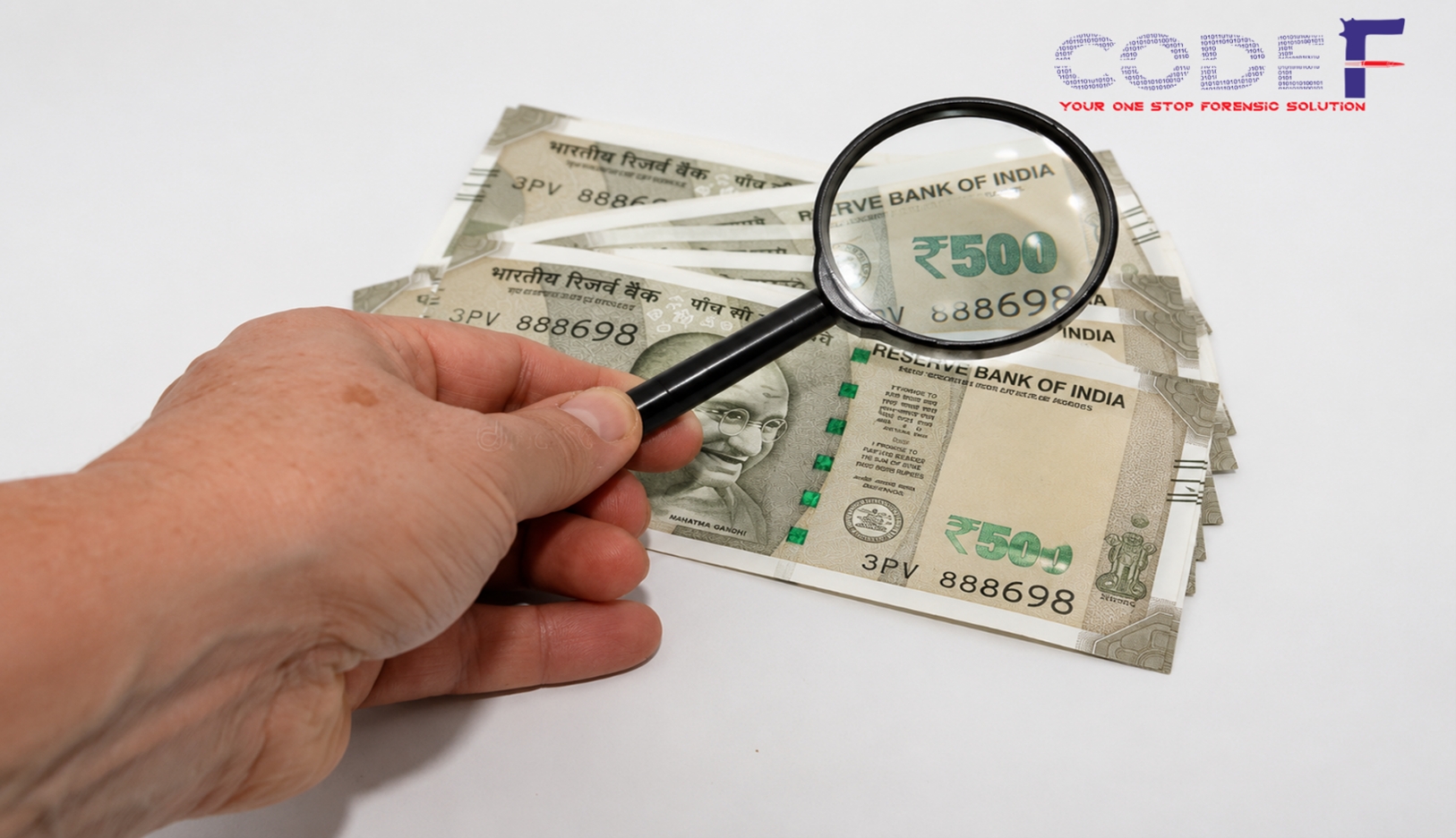
Currency
verification is the process of examining and validating the authenticity of
currency notes and coins to identify whether they are genuine, counterfeit,
altered, or forged. It is an important aspect of forensic examination and
financial security, as counterfeit currency can lead to economic losses, fraud,
and illegal financial activities. Through scientific analysis and advanced
detection techniques, experts are able to verify the originality and integrity
of monetary instruments issued by authorized financial institutions and
government authorities.
During
the verification process, forensic examiners inspect various security features
embedded within the currency, such as watermarks, security threads, holograms,
microprinting, serial numbers, color-shifting ink, ultraviolet (UV) markings,
paper texture, and printing quality. Specialized equipment including UV lamps,
infrared scanners, digital microscopes, and counterfeit detection systems are
commonly used to identify hidden features and detect signs of tampering or
duplication.
Currency
verification plays a significant role in several areas, including:
·
Detection of counterfeit and fake currency
·
Banking and financial fraud investigations
·
Verification of cash transactions and
deposits
·
Security checks in commercial and retail
sectors
·
Customs, border, and law enforcement
operations
·
ATM cash management and currency handling
systems
·
Prevention of illegal financial circulation
·
Criminal investigations involving forged
money
Because
currency is a critical component of economic stability and public trust,
currency verification is widely used by banks, financial institutions, forensic
laboratories, law enforcement agencies, and commercial organizations to ensure
secure and reliable monetary transactions.