Facial Comparison
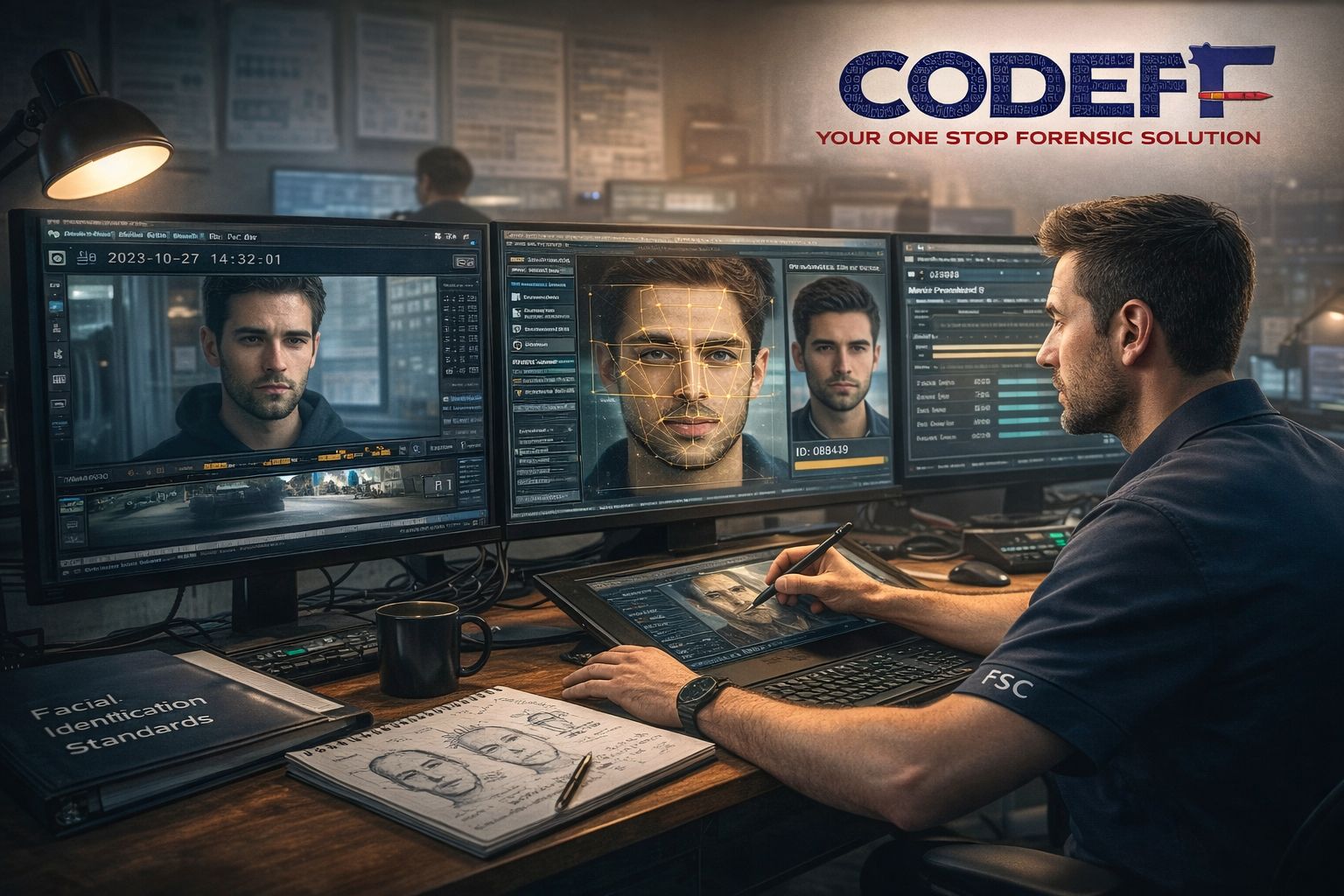
Facial Comparison in Forensics analyzes unique facial landmarks—like eye spacing, nose width, jawline shape, and ear position—from images or videos to establish identity with scientific precision. Forensic examiners use the ACE-V methodology (Analyze, Compare, Evaluate, Verify) to overlay probe images (like CCTV footage) against reference photos, generating match probabilities even from low-quality or angled sources.
This technique proves invaluable across investigations:
Verifying identities in digital media against passports or IDs.
Linking crime scene photos/surveillance footage to suspects via 68+ biometric points.
Matching photos separated by years using age-progression models that account for wrinkles, fat distribution, and bone changes.
Confirming accident victims or analyzing disputed legal documents.
In India, results from certified tools are admissible under Section 63 of Bhartiya Sakshya Adhiniyam, 2023 when hash-verified for integrity. Paired with voice analysis, it creates robust multi-modal evidence for court, with accuracy rates often exceeding 95% in controlled comparisons.
CodeF Solutions PVT LTD
Lorem ipsum dolor sit amet consectetur adipisicing elit sed do eiusmod tempor incididunt ut labore ullamco aliquip commodo.